

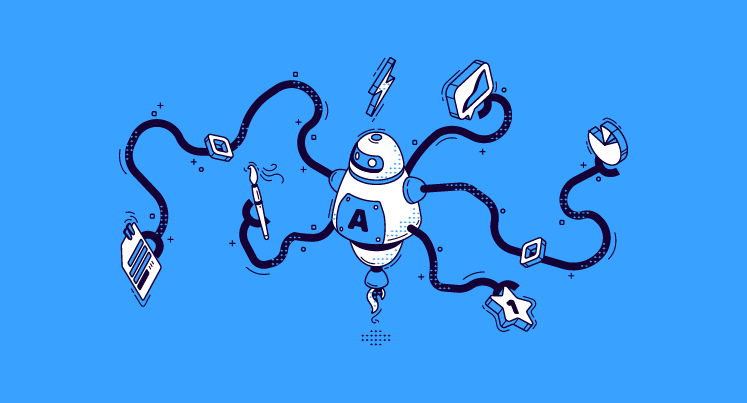
Digital marketing is undergoing a fundamental transformation, driven by the rise of artificial intelligence. AI marketing reshapes traditional strategies through a more personalised, data-driven approach. This article examines its role, significance and future in detail.
What Is Artificial Intelligence?
Artificial intelligence (AI) is the ability of computer systems to perform tasks associated with human intelligence. Applications include data analysis, pattern recognition, language processing, decision-making and problem-solving. Rather than simply copying human intelligence, it uses complex algorithms and learning methods for particular tasks, including machine learning and deep learning. AI is widely used to optimise automation, prediction, recommendations and decisions, improving human performance.
What Is AI Marketing?
AI marketing integrates AI into marketing processes to build more effective strategies. Analysing large amounts of data helps marketers understand and predict customer behaviour and make better decisions.
Its core concepts include machine learning, natural language processing and deep learning. These technologies support ad targeting, content recommendations, customer support and many other marketing activities.
Benefits of AI Marketing
Among its many advantages, the most important include:
- Personalised communication: AI can analyse customers' previous shopping experiences and preferences in depth, then present content and offers tailored to them. This increases customer satisfaction and helps increase sales.
- Data analysis and predictive capabilities: Big data analytics and AI algorithms can measure the impact of marketing campaigns and forecast future trends. This allows marketing strategies to be managed more efficiently.
- Automated processes: By automating repetitive and time-consuming tasks, AI helps marketing teams work more efficiently. This reduces labour costs and saves time.
- A better customer experience: AI can provide faster and more effective support. Automated responses can offer quick solutions to problems and improve customer satisfaction.
- Ad targeting and optimisation: AI can be used for advertising targeting and for building optimised sales funnels. This makes advertising budgets more effective and increases conversions.
What Are the Components of AI?
- Data collection and analysis: AI can collect and analyse large amounts of information. This is important for understanding customer behaviour and determining marketing strategies.
- Machine learning: This is a technique that enables AI to learn from data. In marketing it supports many tasks, including customer segmentation, product recommendations and advertising targeting.
- Natural language processing (NLP): This AI component understands and interprets human language. Marketers use it to analyse customer feedback, understand social media content and provide customer service.
- Image recognition: This component understands and classifies visual content. In marketing it can be used for product recognition, brand monitoring and visual search.
- Sentiment analysis: This component identifies and analyses emotional tones in written material. It can help understand customer feelings, monitor brand reputation and assess social media campaigns.
These components enable a range of marketing tasks and help businesses develop more effective strategies.
The Future of AI Marketing
The outlook is promising. Continuing technological progress will expand adoption and improve strategies. As human-machine interaction grows, AI marketing will become more important. Smarter, more effective strategies give businesses a competitive advantage. Future AI-supported solutions will further improve customer experience and help build stronger relationships, giving AI a more decisive marketing role in the years ahead.
How Can You Bring AI into Your Campaigns?
Follow these steps:
- Set clear objectives: Begin by defining your marketing purposes and goals. Which specific outcomes do you want to achieve? Is the priority greater customer engagement or improved conversion rates?
- Understand your data requirements: Data is fundamental to AI. Decide which information you need and make sure you can access datasets of appropriate quality.
- Select the right AI tools: Research tools that suit your marketing objectives. Consider factors such as ease of integration, scalability and the features available.
- Collect and integrate data: Connect your AI tools with sources such as CRM systems, websites and social media platforms. Maintaining a smooth flow of data is important.
- Apply predictive analytics: Predictive analytics is an effective way to use AI to forecast market trends and customer behaviour.
- Create content: AI-supported platforms can accelerate production of blog posts, product descriptions and social media updates.
- Use chatbots and virtual assistants: You can increase customer interaction by integrating AI-supported chatbots into your website or messaging platforms.
- Optimise email marketing: AI can personalise and optimise email campaigns. Subject lines and content can be adapted to user behaviour.
- Automate advertising campaigns: Using AI to automate campaigns on platforms such as Facebook and Google can make them more effective.
- A/B testing and optimisation: AI can automate A/B tests to identify the most effective strategies. This enables ongoing optimisation.
- Dynamic pricing: AI examines market conditions and optimises pricing strategies, allowing dynamic pricing to be implemented.
- Customer sentiment analysis: AI analyses customer feedback and social media content. These analyses help you understand customer sentiment.
- Measure and analyse campaign results: Assess the effectiveness of AI-led strategies by analysing key performance indicators (KPIs).
Compliance and Ethics
Compliance with data protection and privacy rules is essential when developing AI strategies, particularly for customer safety. Information obtained through AI must be collected, processed and stored in line with privacy policies and legal requirements.
AI marketing represents a significant transformation. Successful integration can support conversions and growth, but it requires continuous learning and adaptation. Appropriate strategies and implementation can produce meaningful results. Compliance and ethics must therefore be considered throughout strategy development.
What to Consider in AI Marketing
Alongside its advantages, AI brings potential disadvantages. Marketers need to consider several factors to use it effectively.
Privacy Concerns
AI marketing has become important in the digital age but raises concerns, particularly about privacy. Targeted advertising relies on analysing online behaviour, which involves collecting and examining personal data. Users may worry about protecting their information. Companies should prioritise privacy and comply fully with data protection rules.
Data Security Risks
Processing and storing large datasets creates security risks. Companies need robust safeguards. Breaches and cyberattacks can severely harm reputation and customer confidence, so security belongs at the centre of AI strategy.
Bias
Bias consists of preconceived negative assumptions about a group or subject. Algorithms may learn it from datasets. An algorithm biased against a demographic group, for example, can reduce ad effectiveness, miss the right audience and waste marketing budgets.
Overreliance on Data
Marketers can become so dependent on AI insights that they overlook intuition and creativity. Effective marketing needs both evidence and human creativity. Companies should use AI data wisely while preserving a human touch.
Lack of Creativity
AI can optimise specific tasks, but it is not creative. Marketing involves originality, humour and emotional context, qualities AI cannot imitate. Companies should therefore encourage creativity and preserve originality while using AI-supported data.
Initial Investment
Implementing AI solutions requires investment. Long-term efficiency and effectiveness can be substantial, but the investment needs strategic evaluation. Returns can strengthen competitiveness. Companies should carefully analyse costs and benefits, choose an appropriate investment strategy and consider both short- and long-term objectives. This supports effective marketing optimisation.
Regulatory Compliance
Companies using AI marketing must comply with data protection and privacy rules. Requirements such as GDPR help fulfil legal responsibilities and increase confidence. Compliance safeguards personal data and privacy while reinforcing transparency and accountability. It therefore deserves considerable attention.
Marketers should weigh these risks while using AI's advantages. A strategy centred on human oversight and ethics is essential to successful AI marketing.


Comments