

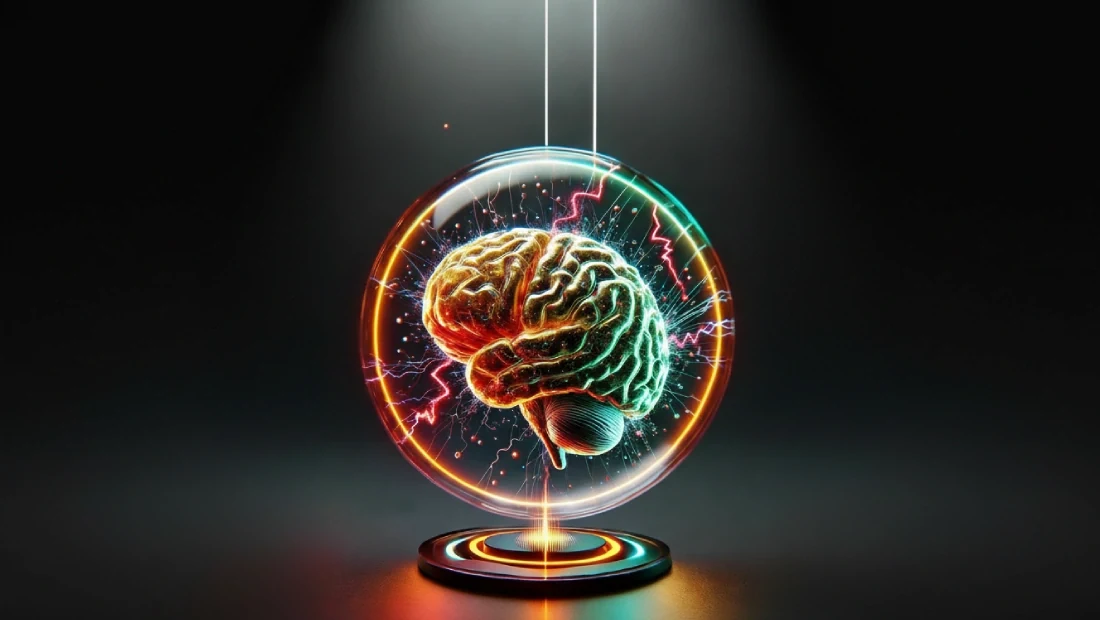
Buying psychology examines the subconscious mechanisms influencing customer decisions. Neuroscience research shows that spending and payment activate the insula in a way resembling physical pain. This article uses neuromarketing to examine how that pain can inform frictionless commerce, how dopamine-based rewards can support conversion and how companies such as Amazon and Uber use invisible payment.
That Is the Technical Introduction. Now Let Us Step Back.
Have you ever added something you really wanted to an online basket, then hesitated over “Complete payment”? You can afford it and want the product, yet something says stop: a slight tightness in your chest, a resistance in your mind.
This is more than indecision. Research suggests deeper biological roots. Studies by George Loewenstein and Scott Rick show that opening our wallets produces an effect resembling physical pain.
Let us explore that neurological struggle and, with academic evidence but accessible language, examine how Amazon, Uber and Salesforce turn pain into pleasure.
What Is Commercial Friction?
Commercial friction is the mental and emotional resistance encountered during a purchase. Neuroscience suggests that spending activates the insula, the brain's pain centre. This “pain of paying” disrupts rational decisions. Successful commerce aims to reduce resistance through invisible payments and dopamine-related rewards.
What Is the Pain of Paying?
It is the neurological counterpart of the feeling of loss when buying a product or service. When money leaves our pocket, especially visibly and consciously, the insula activates as it does in pain, disgust or threat.
Behavioural economics describes the collision of painful payment and pleasurable consumption. The more these moments are separated, the less pain is felt, explaining the difference between cash and automatic card charges.
What Happens in the Brain at the Moment of Decision?
Economists long assumed that people shop rationally, weighing gains and losses. If only it were that simple. fMRI imaging suggests the decision is not cold arithmetic but a heated tug of war deep in the brain.
Pleasure Versus Pain: Insula and NAcc
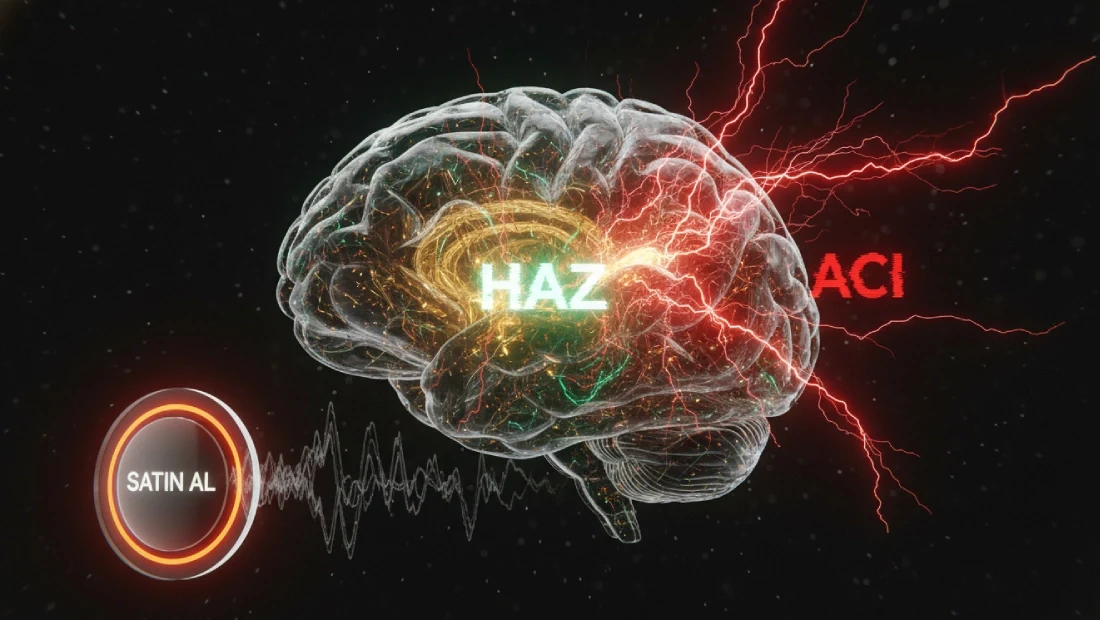 Two main players appear, and their order of arrival influences the sale:
- The pleasure-seeking child: nucleus accumbens (NAcc). It lights up when you see the product, saying “I want it!” Desire, dopamine and reward anticipation belong here.
- The guard applying the brakes: insula. It enters when you see the price or focus on “Buy”.
The striking point: The insula also activates in response to unpleasant smells, disgusting images and physical pain.
Key insight: Neurologically, money leaving a wallet and hitting your foot on a table have little difference. If insula pain outweighs NAcc pleasure, the basket is abandoned. “Buy” becomes a threat warning.
Where Does Reason Fit?
The prefrontal cortex (PFC) mediates between these signals. Online decisions often happen so quickly and subconsciously that reason arrives too late. Your task is to calm the insula rather than merely persuade reason.
Why Cash Hurts
The decoupling effect is central here: the further apart payment and consumption occur, the less pain we feel.
End Taximeter Anxiety
Remember watching the meter in a taxi? Every stop increased the number and made money visibly disappear. At the destination came the wallet, counting notes and waiting for change. Under the Peak-End rule, the experience ended negatively—with payment pain.
Uber and similar apps did not change the taxi; they removed payment pain. You get in, get out and walk away. Payment happened silently in the background, without drawing attention. The insula was not even alerted.
See the difference? Uber decoupled payment pain from the experience. Making payment invisible is frictionless commerce: it quietens the insula.
What Exactly Is Invisible Payment?
You may ask: “Does the money not still leave my bank account when I use Uber? How is that invisible?”
Financially, it leaves the account. Neurologically, however, you do not perform a payment.
- Visible, painful payment: You take out a wallet, hand over a card and enter a PIN. The brain performs an active act of loss.
- Invisible, painless payment: You register a card once through tokenisation. When the service is consumed—leaving the taxi or watching a film—you do nothing.
The distinction: You do not pay; the system charges you. Without an active action, the brain does not trigger the insula's loss signal. The money is gone, but the pain goes unfelt.
The Pain Hierarchy of Payment Methods
| Payment method | Pain level in the brain | Why? |
| Cash | Very high 🔴 | You feel the loss while handing over a physical asset: money. |
| Credit card | Moderate 🟡 | You give and receive back a plastic card. Pain is deferred to your future self. |
| Invisible payment | None 🟢 | The consumer is passive. There is no payment action, only the experience. |
What Does Research Say?
In one experiment, participants expecting to pay by card bid 20–50% more for the same product than those paying cash. Changing the payment method changed the price considered reasonable. [Source: CBS]
fMRI studies show less reported pain and greater spending with cards or contactless payments. [Source: ScienceDirect]
E-commerce sites offering BNPL—buy now, pay later—report average basket increases of up to 20–30% and meaningful conversion gains.
In short: Payment method is not merely a UX detail; it can change how much people spend.
Is “Buy” Really a Stop Sign?
Digital words have weight. For years we have placed large “BUY” buttons on websites. What does the word suggest subconsciously?
- Buy: An exchange. You give money to receive something. It evokes loss. 🔴
- Get / Join: A gain-focused outcome, without the same loss framing. 🟢
To improve conversions, stop using wording that constantly reminds people they are spending. Offer an experience rather than a bill.
How Can You “Hack” the Customer's Brain?
You may be thinking, “I am not Uber. How can I use this?” You do not need a billion-dollar company. Here are practical neuro-strategic changes.
Seven Changes You Can Test Now
1. Soften “Buy” Language
- Test “Continue”, “Start your trial”, “Use now” or “View plan”: copy framing gain rather than loss.
- Use A/B tests to retain wording emphasising the outcome rather than handing over money.
- KPIs: checkout button CTR and completed payments.
2. Cut the Number of Steps Radically
- Instead of Basket → Address → Card → Confirmation, use one page with saved address and payment details where possible. Each extra screen gives the brain cooling-off time.
- Aim for 30–50% fewer steps, even without one-click payment.
- Guest checkout, saved cards and one-click payment shorten the journey. Let the decision occur while pleasure is at its peak.
3. Design the Default Payment Method
- Make cards or digital wallets the default, positioning cash or cash on delivery as secondary choices.
- Offer choice, but make the first option feel easy.
4. Reduce Anxiety
Where possible, use fixed packages, a clear total and an all-inclusive message rather than continuously increasing numbers. Create controlled cost instead of a running taximeter.
5. Create an Endowment Effect with Trials
Trials, discounted first months and small instalments spread payment pain over time. Shift “Should I buy this?” towards “Am I willing to lose it?”
- For software, subscriptions or services, a 14-day trial can collect card details and continue automatically afterwards, without neglecting KVKK and permission requirements.
- The aim is to shift the question from buying to whether giving it up is worthwhile.
6. Monitor Checkout KPIs Through This Lens
Do not look only at overall conversion. Track payment-step drop-off: the proportion reaching payment and leaving there.
Compare it after every microcopy or simplification change.
7. Put Gamification After Payment
Make confirmation more than an invoice. Activate confetti, badges and completion signals after payment succeeds. Small animations, progress indicators and success messages should convey “You completed something” rather than “You spent money”.
- Excessive animation during payment may trigger suspicion of a fake or manipulative site.
Amazon's Patent That Removes Thinking Time
Was Amazon's famous 1-Click patent only about convenience? Neurologically, no: it is a strategic intervention in the prefrontal cortex.
The usual Basket → Address → Card → Confirmation flow gives reason a cooling-off period to ask, “Do I really need this?” Amazon reduces it to seconds, completing the sale before dopamine-driven desire fades.
Future Pain Feels Different: BNPL
Klarna, Affirm and instalments are more than financial conveniences. They draw on hyperbolic discounting, a strong cognitive bias.
The brain focuses on now and struggles with the future.
- Scenario A: “Pay TRY 10,000 now.” → Major pain!
- Scenario B: “Pay TRY 1,000 monthly.” → No pain.
Even with the same total, splitting and deferring pain quietens the insula's alarm.
Then Comes the Confetti: Gamification
Confetti after payment is more than an animation. It replaces “You lost money” with “You completed a task and earned a reward”, turning payment into a dopamine-releasing game.
Bain & Company's UK BNPL market analysis reports baskets 20–30% higher than card payments. RBC Capital Markets estimates increases of 30–50% for BNPL customers at some retailers.
Creating Belonging: Salesforce and Membership
Neuroscience also applies in B2B. Salesforce Trailhead awards ranks such as “Ranger” and badges for completing training.
This draws on sunk costs and identity construction. After investing time and collecting badges, switching software means losing status, not merely changing tools.
Netflix and Spotify trials create the endowment effect: people psychologically take ownership. At the end, the question becomes whether they are willing to lose it. Humans dislike loss.
The Fine Line: Neuromarketing or Manipulation?
These approaches reduce payment pain, but the critical question is: Are we persuading or manipulating?
Three questions draw the line:
1. Does It Benefit or Harm the User?
Models that damage financial health, fuel debt or deliberately obstruct cancellation are manipulation.
Simpler payment, fewer unnecessary fields and clearly communicated value benefit users.
2. Are You Transparent?
Burying charges, commitments and cancellation terms in small print is deception, not neuromarketing.
If people understand what they agree to at every step, the process remains within ethical boundaries.
3. Are You Deliberately Narrowing the Exit?
One-click signup followed by email, phone and fax cancellation is a trap, not design.
Good design persuades without insulting intelligence and reduces behavioural friction.
Use neuroscience to create fairer, smoother, mutually beneficial experiences, not merely greater spending. Otherwise short-term revenue becomes long-term erosion of trust.
Five Rules for Reducing Payment Pain
The theory, studies and examples suggest five central rules:
1. Frame Value, Not Price
Use gain-oriented wording such as Continue, Start your trial or See the solution instead of only Buy.
2. Separate Payment from Experience
Cash hurts because payment and consumption coincide. Background, automatic payment quietens the insula.
3. Reduce Steps and Hesitation
Every field and click gives the prefrontal cortex time to ask, “Do you really want this?”
4. Bring the Future Self into the Decision
Instalments, subscriptions and trials spread pain through time and use hyperbolic discounting. Always do so transparently and in the user's interest.
5. Spread Pleasure Across the Experience
Do not reserve confetti, status, badges and belonging for payment confirmation. Make every product interaction part of a rewarding cycle.
Apply these principles across button text, checkout, pricing and onboarding, and “Buy” can shift from a stop signal to an invitation to continue.


Comments