

How did Google grow? What were the most important factors in its development?
Its influence is so strong that a moment without access can feel like the end of the world.
We have planted important parts of our lives in Google’s soil and do not want those roots to wither if separated. Could another environment sustain us just as well and offer the same possibilities?
How did Google gain that influence? How did it become so large?

Consider a company born in a garage that now influences the world economy, answers questions and makes life more convenient. It began in 1995 when Sergey Brin and Larry Page became friends. According to Google’s account, they disagreed about almost everything, yet formed a partnership a year later. They began developing a search engine that assessed the importance of individual webpages, calling it Backrub.
Soon they decided to change the name. A modified version of the mathematical term for 1 followed by 100 zeros produced Google.
Larry and Sergey described their mission as organizing the world’s information and making it universally accessible and useful.
In August 1998, Sun co-founder Andy Bechtolsheim wrote them a check for US$100,000, and Google Inc. was officially born. Incorporation date: 4 September 1998.
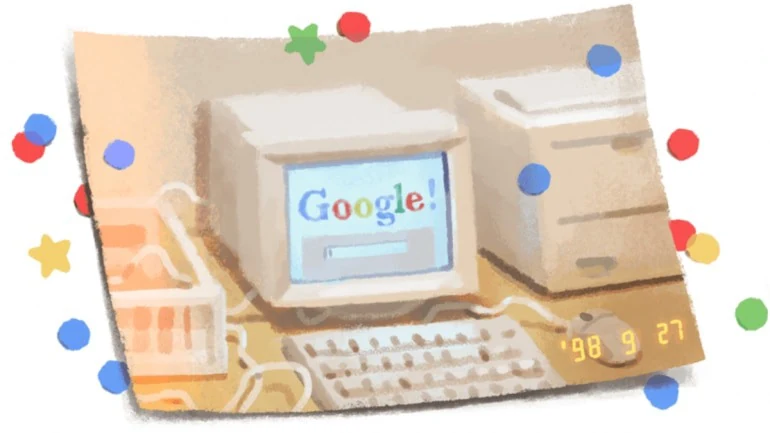
The investment allowed the team to leave their dorm rooms for a first office: a garage in Menlo Park, California, owned by Susan Wojcicki, the 16th employee and YouTube’s current CEO. Bulky desktop computers, a ping-pong table and a light-blue carpet formed the backdrop to those early days and late nights.
The Search Engine Market
In 1994, before Backrub had even been conceived, Lycos and Infoseek were the most popular search engines. Lycos began that year as a research project by Dr. Michael Mauldin at Carnegie Mellon University.
Steve Kirsch founded Infoseek in 1994.
While those two remained popular, competitors such as Excite, Yahoo! and AltaVista continued developing.
Excite officially launched in 1995, but could not prevent AltaVista from taking the lead within a year. In the first quarter of 1996, AltaVista became the most popular engine.
Created in 1990, the first search engine, Archie, located files available through anonymous FTP.
Users still struggled to find information unless they entered exact-match terms.
AltaVista, the first engine to offer natural-language search, became Yahoo’s sole search-results provider in 1996. An opportunity to become the first internet company to float in April 2000 did not materialize. Subsequent strategic mistakes cost it its market advantage to Google.
The picture in the first quarter of 1996 was:
- AltaVista
- Excite
- Lycos
- Infoseek
- Yahoo!
- Ask Jeeves
In 1993, Ilya Segalovich and Arkady Volozh began work toward a new search engine. They developed search technology at a small company called Arcadia, which joined computer and software seller CompTek. A few years later, CompTek became the founder of today’s Yandex. Yandex launched on 23 September 1997.
Yahoo’s rapid rise defined the third quarter of 1999. Let us look at it briefly.
Founded by Jerry Yang and David Filo, the portal initially provided search, then expanded into email, instant messaging, email groups and other services in pursuit of market leadership.
Meanwhile, Google was preparing to accelerate in the market with its investment.
Yahoo retained leadership until the fourth quarter of 2002, when it lost that position to today’s giant, Google.
By the final quarter of 2005, Google was the most popular search provider, well ahead of its closest competitor, Yahoo!
Google accounted for 44.12% of all traffic; Yahoo! held 22.81%.
Numerous initiatives, experiments and mergers subsequently tried to challenge Google’s position.
Bing is Microsoft’s search engine. Trials began in the first half of 2009, initially announced under the name Kumo, with an ambition to “change habits.”
Bing became one of the three most-used engines in 2010. It ranked second in 2011 but lost that position to Baidu Search near the end of the second quarter of 2012.
The ranking in the third quarter of 2019 was:
- Baidu Search
- Bing
- Yahoo!
- Yandex
Those are the beginnings, developments and outcomes. Now to the central question: How did Google grow?
How Did Google Win the Search Engine Battle?
Google is now a dominant force in search, with an impressive market share that overshadows competitors in many key markets. Which other search engine’s name has become a verb?
It was not always this way. Excite and Yahoo (AltaVista) were major players among roughly a dozen engines. Google was just starting, with ideas and plans but serious uncertainty about funding. We have already seen where that funding came from and its effects.
1. Focus on the User

Google began with the idea that users primarily want the most relevant information for their queries. Its mission remains: to organize the world’s information and make it universally accessible and useful.
Sergey Brin and Larry Page regarded links and clicks as recommendations and indicators of relevance and value. This became the foundation of Google’s operation and continues today, with improving quality.
Google says: From the beginning, we have focused on providing the best possible user experience. Whether designing a new browser or changing the homepage, we take great care to ensure the result serves you rather than our internal goals or systems.
2. Technology
Ideas matter, especially when put into practice. In my view, the concept of relevance is one foundation of Google’s strength. It was built to connect people with more suitable results than competing engines. A query on Google offered more relevance and value than on Excite, Yahoo and others.
Google says: We do search. With one of the world’s largest research groups dedicated exclusively to solving search problems, we know what we do well and how to improve it. We solve difficult problems and continually refine a service that makes finding information fast and seamless for millions, always seeking better answers to challenging questions. Our commitment to improving search helps us apply what we learn to products such as Gmail and Google Maps.
Simply put, Google had a superior product—and a good idea.
Google’s Radical Decision
3. They Did Not Depart from the “Walled Garden” Approach
While search was still establishing its place on the web, monetization posed a major problem. “Stickiness” was considered the best model: attract people to your pages and keep them there as long as possible.
Google did something entirely different. First, it did not put ads on its pages. Second, a query sent users elsewhere, toward relevant results. This was radical because Google did not yet have a revenue-generating business model.
A walled garden is a closed ecosystem in which the operator controls all activities.
4. Advertising as a Distinctive Model
Google’s advertising model distinguished it from other search engines. Like many major technology moves, the idea that led to AdWords was borrowed from Overture Services.
Recognizing advertising as a profitable necessity but rejecting Yahoo and Excite’s path, Google introduced unobtrusive text ads separate from organic results. The auction-based pay-per-click model came from Overture. In 2002, the companies became involved in litigation; Google denied infringing patent rights. Readers can explore the CNET report.
Google’s difference was its emphasis on relevance and its application to Overture’s model. The system assumed that searches reveal not just interests but also what people want to buy.
Overture favored the highest bidder, potentially placing irrelevant ads first. Google added click-through rate to its algorithm as a measure of relevance.
5. Speed

People are becoming less patient about time and may abandon a search rather than wait to find what they need.
Google says: We know our users’ time is valuable. When you search the web, you want the answer immediately, and we want to satisfy you. We may be the only people who want visitors to leave our website as quickly as possible. Removing unnecessary bits and bytes and improving server efficiency has repeatedly broken our own speed records, reducing average search response times to fractions of a second.
A platform that brings the right answer within fractions of a second: who would not appreciate a service that values their time?
Google’s Other Important Principles
- Democracy on the web works.
- There is always more information to discover.
- The need for information crosses all borders.
- You do not need a suit to be serious.
- There is always room to improve.
There Is Always Room to Improve
A quotation from Google:
We see being great at something as a starting point, not a destination. We set goals we know we cannot yet reach because working toward them can take us further than expected. Through innovation and experimentation, we aim to create useful products and improve them in many ways. When one engineer noticed that search worked well for correctly spelled words, for example, he examined how it handled spelling mistakes. This led to a more intuitive, useful spellchecker.
Even when you do not know exactly what you seek, we believe finding an answer on the web is our problem, not yours. We try to anticipate needs our global users have not yet expressed and provide products and services that meet them with new standards.



Comments