


This Google algorithm update archive lists changes to ranking systems that matter to website owners. It includes important developments, explanatory notes and useful resources.
Google Algorithm Updates in 2023
September: Google Updates
Google: A helpful content update improving the classifier has been released. The rollout is expected to take around two weeks.
The September helpful content update includes changes to Google's helpful content system documentation and guidance for website owners. It introduces points to consider when creating and presenting content.
More flexible guidance on machine-generated content: Google is relaxing wording around automatically generated content. AI- or software-assisted material can be accepted and perform in search, provided it remains high quality and useful to people.
Third-party content on subdomains: The update addresses third-party material hosted under a website's main domain. Google may examine and manage this content more closely. Website owners should maintain appropriate oversight, particularly for user experience and security.
Helpful content updates and traffic losses: The changes can affect website traffic. Google provides further guidance for sites that lose visibility. Owners should consider that guidance when working to reduce losses and recover rankings.
August: Core Update
The August 2023 core update was released, with the rollout expected to take up to two weeks.
It was completed on September 7, 2023, after 16 days and 3 hours.
April: Reviews Update
The reviews update began on April 12, 2023, covering reviews of products, services and other subjects. Learn more about writing high-quality reviews.
The rollout ended on April 25, 2023, taking 13 days and 2 hours.
March: Core Update
The March 2023 core update was released with an expected two-week rollout.
It finished on March 28, 2023, after 13 days and 7 hours.
February: Google Updates
1) Changes to Search Console's Video Indexing Report
Video plays an important role online, and consumption continues to rise. Brands need to respond to that demand. Creating and uploading video is not enough; performance in Google search also matters. Google introduced a Search Console report the previous July, and this section discusses further developments.
- The Search Console report helps monitor video performance. The metrics discussed include views, click-through rate and cost per click. More detailed performance information can help identify improvements and support stronger search visibility.
- A video sitemap tells Google where videos are and what they contain. It can support faster, more accurate crawling and more visibility in search results.
- Video features such as previews and play buttons help people engage. A preview can attract attention and improve click-through, while a play button gives faster access to the video.
2) Google Search Guidance on AI-Generated Content
Google Search does not ban AI content. It takes measures against material that overwhelms results with spam, aiming to preserve quality.
Rather than prohibiting AI, Google's guidance emphasizes original, high-quality, helpful content. AI-generated material must meet those same standards. Websites using it should work to ensure quality and originality.
Google uses algorithms to identify spam and prioritizes useful material. AI-generated content can therefore appear in results when it is original and of good quality.
How can Google identify AI being used for spam?
There are possible warning signs. Excessive keywords or repeated groups of the same terms can suggest spam production using AI.
Can AI-generated content rank highly?
It can, when the result is useful, original and engaging. If the material is poor or adds no value, using AI will not make it perform well.
Creating content with AI provides no automatic advantage. Performance depends on quality, value to the reader and suitability for search.
Google Algorithm Updates in 2022
Page Experience Update for Desktop
The year's first update began in February: page experience for desktop. At I/O 2021, Google had said it was preparing to use page experience in desktop rankings. Work tested in beta was introduced in February. Google emphasized that it extended the mobile page experience rollout from June–August 2021.
The desktop rollout began in February and was fully available by the end of March 2022. It was based on the page experience signals used for mobile.
Mobile-friendliness remains a mobile ranking signal but does not apply to desktop. Where a site has correctly configured separate mobile and desktop URLs, the desktop signal uses the URLs shown to desktop users.
Google Product Reviews Update
Google regularly improves automated ranking systems to make results more useful. This update aims to surface reviews with detailed research rather than shallow summaries of several products.
It rewards high-quality review content that supports more useful results. Detailed analysis and original observations matter. Expertise adds value, as can an enthusiast's thorough research and product evaluation.
At this point, the update targeted English-language searches worldwide. Without a further announcement extending it, English remained its stated language scope.
The product reviews update primarily evaluates review content at page level. On sites containing a substantial amount of product reviews, it may also assess content across the site.
Structured data helps identify product reviews to Google. Applying that markup alone, however, does not make something a genuine product review.
Google continued introducing changes throughout 2022 to improve useful results. Many sites were affected in the first quarter. Notable developments included the May core update and later content and spam updates.
Core Updates: May–June 2022
Several times a year, Google makes broad changes to its search systems and algorithms. These core updates are designed to provide useful, reliable results.
Google explained that a site that was not performing well before the update might not necessarily see a major change afterward. It could remain broadly where it was. Perhaps Google's message was that the position reflected its assessment :)
The update does not target particular pages or websites. It improves how content is evaluated overall. Pages with unrealized potential that were previously under-rewarded may perform better.
A change after a core update does not mean a page has a specific problem to fix. Google understands why owners of pages that perform less well still feel they should act. The recommendation is to focus on providing the best content possible; the algorithms seek to reward it.
Many people have advocated this approach for years. Others have tried different routes, but useful content remains the lasting foundation. People want accurate information rather than manipulation. When they recognize that they are being misled, they continue their research elsewhere. How might Google interpret those experiences?
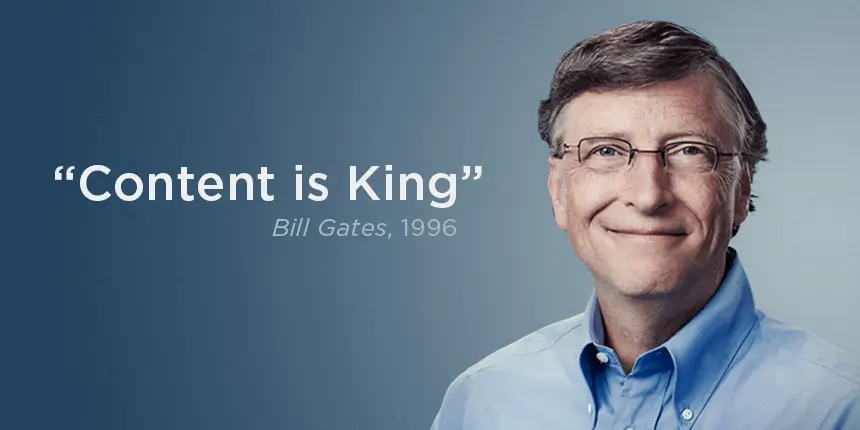
The explanation above gives the answer. To repeat the familiar phrase: CONTENT IS KING! — Bill Gates, 1996.
Gates expected content to be where much of the real money would be made online, as it had been in broadcasting. Bill Gates
On-page SEO optimizes page content for people and search engines. Typical areas include title tags, content, internal links and URLs. Read my blog article for more detail.
Can a Site Recover After a Core Update?
Affected content may need to wait until another broad core update before recovering, even after improvements. Google also makes many smaller changes beyond the widely announced updates. Listing them all would make this archive much longer. Many are not announced because their effects are subtle and there is no specific fix to prescribe. Successful site improvements can help when systems are reassessed.
Improvements do not guarantee recovery. Pages have no fixed or guaranteed place in search results.
Product Reviews Update: July 2022
Another product reviews update began in July 2022. Its rollout for English-language searches was completed on August 2, 2022.
Helpful Content Update
Google's ranking systems use helpful content signals to show original, useful material in search results. (Google)
The system aims to reward content that gives visitors a satisfying experience. Material that fails to meet their expectations is less likely to do well.
In addition to page-level ranking signals, the system creates a site-wide signal. It automatically identifies low-value material and content that does not help people searching.
Google sometimes quotes passages in results. A substantial amount of unhelpful material can affect how a site is assessed. Evaluate your content carefully: removing an unhelpful article can sometimes support the rankings of other pages.
In short, create content for people, with genuine value, rather than for search engines alone.
The update began on August 25, 2022, and finished on September 9, 2022.
The September 2022 core update was released and completed its rollout on September 26, 2022.
An SEO audit should review page-level elements. For areas to inspect and how to assess them, see Nine Important Page-Level Factors.
Google Spam Update
Google's automated spam-detection systems run continuously and are regularly improved.
SpamBrain is Google's AI-based spam-prevention system. Periodic improvements help it recognize new types of spam.
If you think your website was affected, review the Google spam policies. Affected websites may lose substantial visibility or disappear from results.
The Final Google Update Announcement of 2022: Helpful Content
A helpful content update was released in December 2022. It improved the classifier and applied globally across languages.



Comments