

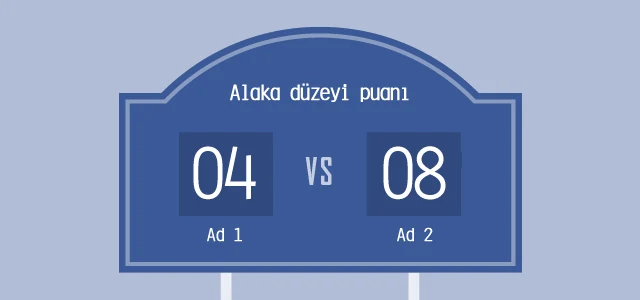
Campaigns that do not fit their target audience are neither engaging nor profitable. Major online advertising platforms therefore have ways to assess ad quality and relevance: Quality Score for Google Ads, and relevance score for Facebook.
This article explains Facebook relevance: what the score means, how it is calculated and how to improve it to achieve stronger results.
Note: From 30 April 2019, Facebook will replace relevance score with three new dimensions: quality ranking, engagement rate ranking and conversion rate ranking. The changes also affect how Facebook calculates potential reach.
What Is Facebook Relevance Score?
Relevance score combines ad quality and relevance factors to indicate how well an ad suits its audience compared with competing ads. It is rated from 1 to 10.
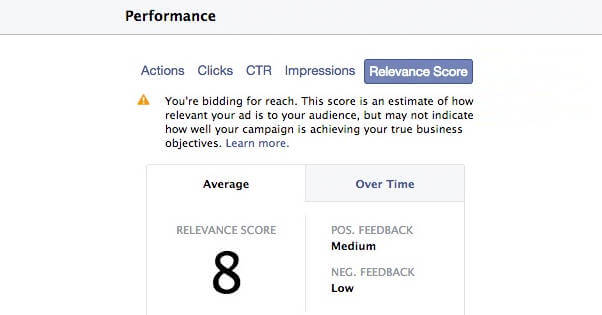
Information: On the 1–10 scale, 1 means your ad is much less relevant than other ads targeting the same audience; 10 means it is much more relevant. The score becomes visible after approximately 500 impressions.
Examining the Data
You may wonder: “Why does this matter? It is only a number!” It represents much more than that. Relevance combines engagement, clicks, conversions, click-through rate and negative comments. A single number can quickly indicate whether an ad is likely to win or lose.
To illustrate its importance, AdEspresso analyzed 104,256 ads to assess how scores could affect CPC. Here is what it found.
Relevance score directly affects advertising costs. When Facebook decides which ad to show a particular user, it prefers the one it considers more relevant. Low audience relevance therefore makes advertising more expensive.
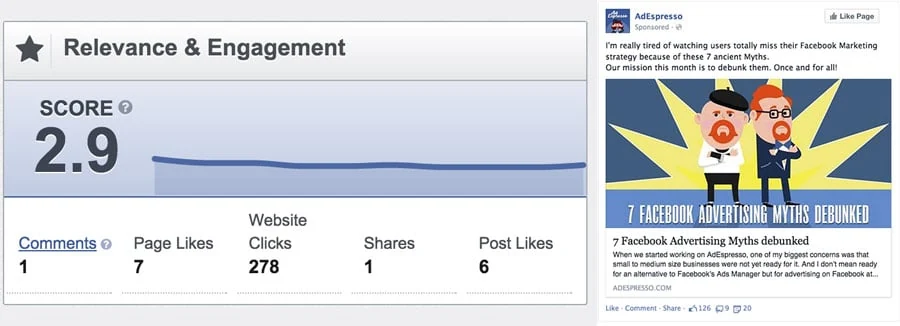
The following ad had a relevance score of 2.9, weak targeting and an average cost of 0.81 kuruş per website click:
The ad below is identical, but targets a website Custom Audience consisting only of people who visited the site during the previous 90 days. Its relevance score is 8, with an approximate click cost of 0.14 kuruş.
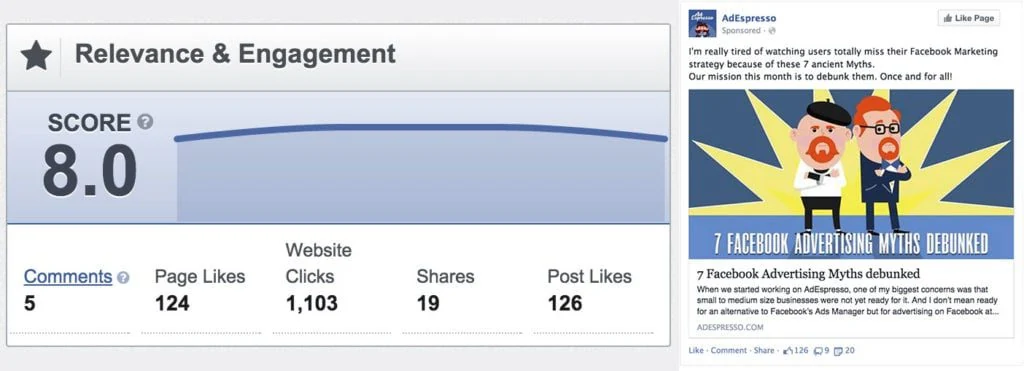
Four times as many clicks with the same budget.
The higher the relevance score, the lower the cost per click and the better the click-through rate.
How Is Ad Relevance Score Calculated?
The score is calculated from the positive and negative interactions an ad receives from its target audience. More positive interaction produces a higher score.
When an ad is relevant, more people take the intended action, creating positive feedback. If users instead hide the ad to prevent further impressions, the effect is negative. These positive and negative responses influence relevance and determine CPC.
The fewer people who report that the ad is irrelevant to them, the better its score. Relevance therefore matters considerably to the cost of generating impressions.
A summary of the metrics with the greatest influence on relevance score:
- Negative signals: A user hiding your ad from their feed is considered a strong indication that you are targeting the wrong audience.
- Campaign objective: I consider this the strongest potential positive influence. If your objective is likes and you receive many likes, that is a good sign. The same applies to conversions, website clicks and other objectives. The better you perform against the campaign goal, the higher the score.
- CTR: The higher your click-through rate, the more relevant Facebook considers your ad. People naturally do not click ads unrelated to them.
- Shares: My observations and research statistics suggest that Facebook treats sharing as the strongest endorsement of an ad’s quality.
- Likes and comments: Although the data does not show a clear correlation, I believe Facebook considers likes and comments positive quality signals. Comments are more complex: without understanding their context, assigning a positive or negative value is difficult.
Four Strategies for Improving Relevance
1. Use several ad variations
Run different ads for the same audience simultaneously to prevent excessive frequency. Frequency indicates how often, on average, a person in the audience sees an ad. If it becomes too high, people may tire of your advertising, negative feedback can increase and the relevance score may fall.
Especially with smaller audiences, varying creative keeps the work fresh, prevents ad fatigue and supports higher relevance scores.
2. Shorten retargeting windows
Retargeting can be highly effective on Facebook, with some of the highest ROAS figures often coming from these campaigns.
Facebook allows advertisers to target users who visited their website in the previous 180 days, a common choice. Repeated exposure to the same company’s ad, particularly over a long period, can nevertheless reduce relevance through excessive frequency.
Shortening retargeting to 30-day or even 14-day campaigns can improve results.
3. Know your audience to tailor ads more effectively
Targeting the right audience is only half the task. You also need a message that speaks directly to it. An ad that connects with people increases engagement and relevance.
Keep the following tips in mind:
- Make ads look as close as possible to ordinary Facebook posts to avoid putting off potential customers and generating high negative feedback.
- Publish videos with high-quality visuals and sound. Use calls to action and the content itself to make their advertising purpose clear.
- Create image ads containing no more than 20% text, and ensure videos have high-quality visuals and sound.
4. Reconsider your targeting strategy
There is a fine line between too much targeting and too little.
Your audience should have enough in common for you to develop ads and offers that address shared needs directly. Overly broad targeting risks showing ads to people who do not respond to the message.
On the other hand, many advertisers narrow their audiences excessively, potentially harming performance and relevance.
What should you do?
One option is to launch an ad with broad targeting and allow Facebook’s learning phase to run. During this phase, it tries to discover which audience members are most likely to take your desired action. Starting with a larger audience gives it more room to find high-converting segments.
Facebook explains that relevance score reflects advertising performance. A higher score is associated with better performance, but does not independently cause it.
Use the metric to understand relevance, then focus on improving targeting and creative. If an ad has an average score but already performs very well, however, you may prefer to change nothing. Achieving the desired outcome ultimately matters more than the score.



Comments